

What Is the Health Triangle?
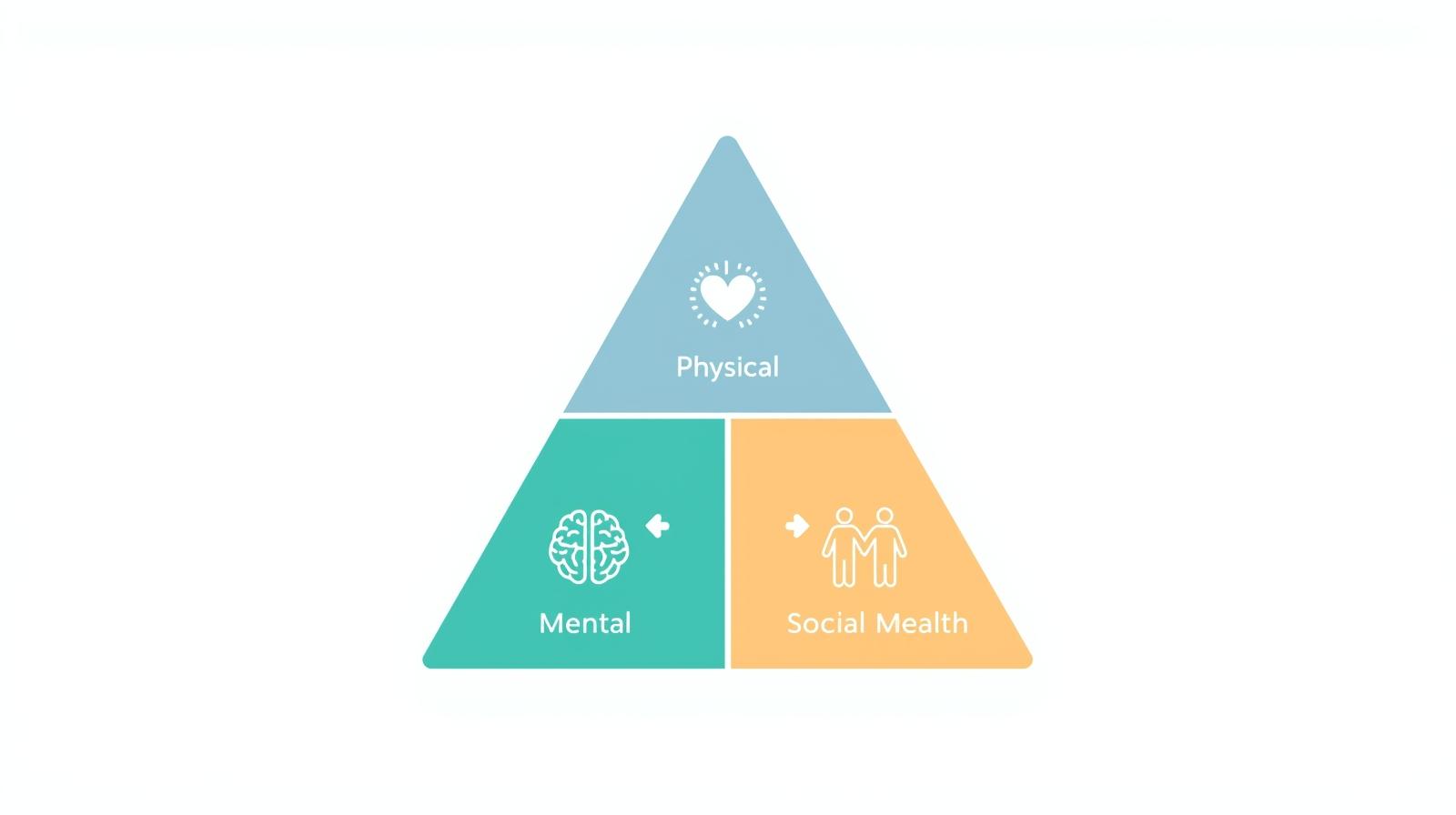
The health triangle is a simple model used to explain overall well-being. It shows that good health is not just about the body. Instead, it depends on three connected parts: physical health, mental (or emotional) health, and social health.
These three parts form a triangle. Each side must stay strong to keep the triangle balanced. If one side becomes weak, overall health can suffer.
The health triangle is commonly taught in schools, health programs, and wellness education because it is easy to understand and practical to apply in daily life.
The Three Sides of the Health Triangle
Each side of the health triangle plays an important role. Let’s break them down clearly.
Physical Health
Physical health refers to how well your body functions. It includes:
-
Regular exercise
-
Nutritious food
-
Proper sleep
-
Personal hygiene
-
Avoiding harmful habits like smoking or drug use
When your physical health is strong, you have more energy, better immunity, and a lower risk of illness.
Mental and Emotional Health
Mental health is about how you think, feel, and handle stress. Emotional health focuses on understanding and managing your emotions.
Key signs of good mental health include:
-
Positive self-esteem
-
Ability to cope with stress
-
Emotional balance
-
Clear thinking and focus
Mental health is just as important as physical health. Stress, anxiety, or emotional burnout can affect the body and relationships.
Social Health
Social health is about how you interact with others. It includes relationships with:
-
Family
-
Friends
-
Classmates or coworkers
-
Community
Strong social health means good communication, respect for others, and feeling supported. Humans are social beings, and healthy relationships improve happiness and confidence.
Why the Health Triangle Is Important
The health triangle is important because it shows that true health is balanced health.
You might exercise daily, but if you feel lonely or stressed, your overall health is not complete. In the same way, strong social bonds cannot fully protect health if physical or mental health is poor.
Understanding the health triangle helps people:
-
Make better lifestyle choices
-
Identify weak areas of health
-
Improve long-term well-being
How the Health Triangle Works in Real Life
The health triangle works like a system. Each side supports the others.
For example:
-
Exercise (physical health) reduces stress (mental health)
-
Good friendships (social health) improve mood (mental health)
-
Positive thinking (mental health) motivates healthy habits (physical health)
This connection shows why balance is essential.
What Happens When One Side Is Weak?
If one side of the health triangle is weak, the whole triangle becomes unstable.
Examples:
-
Poor mental health can lead to sleep problems and fatigue
-
Weak social health can cause loneliness and depression
-
Poor physical health can reduce confidence and social activity
Over time, imbalance can lead to serious health issues. That’s why all three sides must be maintained together.
How to Maintain a Balanced Health Triangle
Here are simple and practical ways to strengthen each side of the health triangle:
For Physical Health:
-
Walk or exercise at least 30 minutes daily
-
Eat fruits, vegetables, and whole foods
-
Sleep 7–9 hours per night
For Mental Health:
-
Practice relaxation or mindfulness
-
Set realistic goals
-
Talk about your feelings when stressed
For Social Health:
-
Stay connected with family and friends
-
Communicate openly and respectfully
-
Participate in group or community activities
Small daily habits make a big difference over time.
Health Triangle in Students and Daily Life
The health triangle is especially important for students. Academic pressure, screen time, and social challenges can affect balance.
Students who manage all three sides often:
-
Perform better academically
-
Handle stress more effectively
-
Build healthier relationships
However, the health triangle is not only for students—it applies to adults, professionals, and seniors as well.
Conclusion
The health triangle is a powerful yet simple way to understand overall well-being. By balancing physical, mental, and social health, individuals can live healthier, happier, and more productive lives.
True health is not about focusing on just one area. When all three sides of the health triangle are strong, the result is long-term wellness and stability.
❓ Frequently Asked Questions (FAQs)
What is the health triangle?
The health triangle is a model that shows health has three parts: physical, mental, and social health. All must be balanced for overall well-being.
Why is the health triangle important?
The health triangle helps people understand that good health is more than just physical fitness. Mental and social health are equally important.
What are the three sides of the health triangle?
The three sides are physical health, mental (emotional) health, and social health.
How can I improve my health triangle?
You can improve your health triangle by exercising regularly, managing stress, and maintaining healthy relationships.
Can the health triangle change over time?
Yes, the health triangle can change depending on lifestyle, age, stress levels, and personal habits. Balance should be reviewed regularly.


